





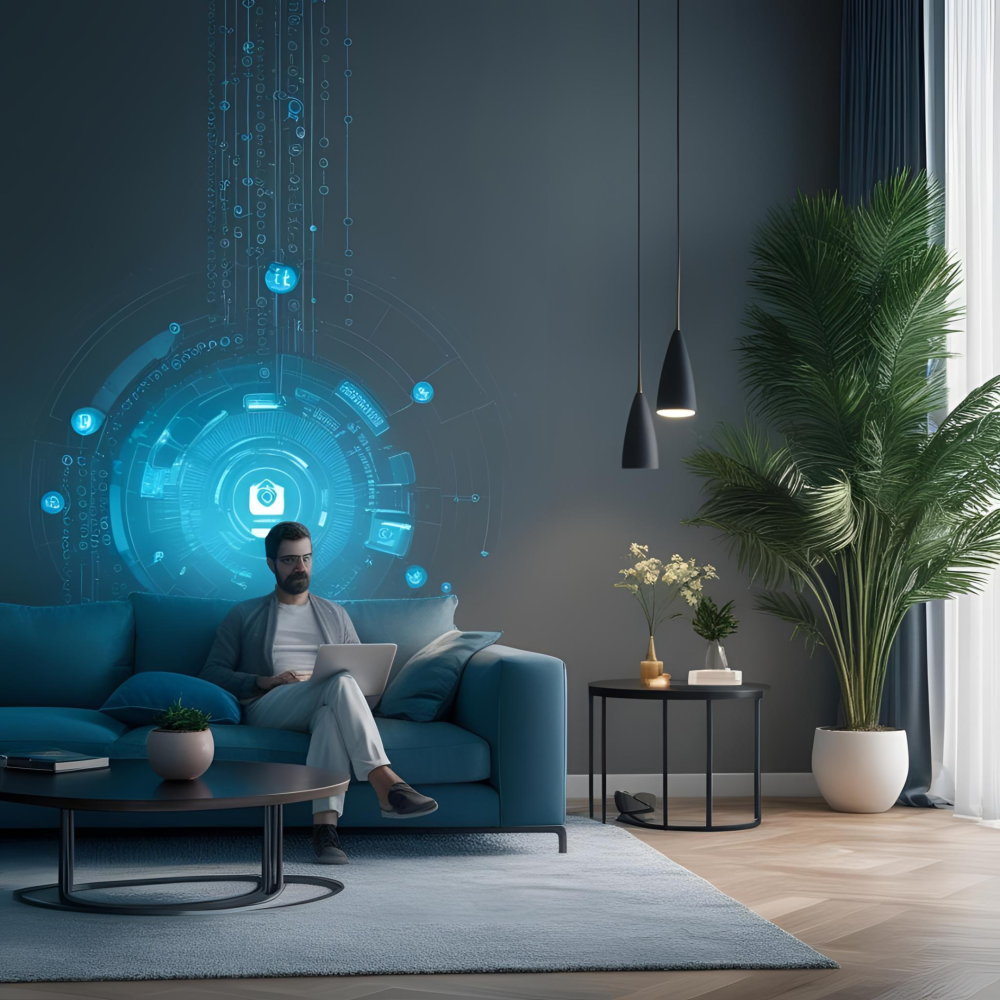
We're standing at the precipice of one of the most significant - yet least visible - technological shifts in modern history. Ambient computing represents a fundamental reimagining of how we interact with technology, moving away from screens and explicit commands toward an environment where technology anticipates our needs before we're even aware of them ourselves.
Consider these statistics that highlight the rapid adoption of ambient technologies:
72% of smart speaker owners say they now use voice commands more than touchscreens (PwC 2023)
The global ambient computing market is projected to reach $1.4 trillion by 2030 (McKinsey)
Average households will contain over 50 connected devices by 2025 (IDC)
Future homes will feature technology that's everywhere yet nowhere visible
The concept of ambient computing isn't new. We can trace its roots through several key developments:
1991: Mark Weiser's seminal paper "The Computer for the 21st Century" introduces the concept of ubiquitous computing
2007: Smartphones begin embedding always-on sensors
2014: Amazon Echo launches mainstream voice computing
2020: COVID-19 accelerates adoption of contactless interfaces
2023: Matter protocol enables seamless smart home integration
Several critical technologies are converging to make ambient computing possible:
Edge AI: Local processing that doesn't require cloud connectivity
Low-power sensors: Always-on devices with year-long battery life
Spatial computing: AR/VR blending digital and physical worlds
Biometric monitoring: Wearables that track health metrics passively
Context-aware algorithms: Systems that understand situational needs
The journey from visible to invisible computing interfaces
Ambient computing is transforming healthcare in profound ways:
1. Early Disease Detection
Smart mirrors analyzing facial micro-expressions for neurological conditions
Toilet sensors monitoring waste for disease biomarkers
Bed sensors tracking subtle sleep pattern changes
2. Elderly Care
Floor sensors detecting falls without cameras
Medication cabinets reminding about missed doses
Voice assistants providing companionship
3. Mental Health Support
Smart lights adjusting for circadian rhythms
Voice analysis detecting depression markers
Wearables suggesting breathing exercises during stress
Future bathrooms may become health diagnostic centers
Ambient technologies are reshaping workplaces:
1. Intelligent Offices
Desks adjusting height based on posture
Air quality systems responding to CO2 levels
Meeting rooms auto-recording when discussions begin
2. Industrial Applications
Factory floors where machines self-diagnose issues
Warehouse robots collaborating with human workers
Safety gear monitoring fatigue levels
3. Hybrid Work Solutions
Whiteboards digitizing content automatically
Audio systems focusing on active speakers
Presence detection for space utilization
Modern ambient systems rely on sophisticated sensor arrays:
| Sensor Type | Function | Example Use |
|---|---|---|
| Millimeter Wave | Presence detection | Security systems |
| Lidar | Spatial mapping | Robot vacuums |
| Thermal Imaging | Temperature monitoring | HVAC control |
| Capacitive Sensing | Touchless interfaces | Smart mirrors |
| Radar | Micro-movement tracking | Sleep monitoring |
Three key AI advancements enabling ambient computing:
TinyML: Machine learning models small enough to run on microcontrollers
Federated Learning: Improving algorithms without compromising privacy
Contextual Understanding: Systems that grasp situational nuances
Innovations keeping devices always-on:
Energy Harvesting: Drawing power from light, motion, or radio waves
Ultra-low-power Chips: Processors using nanowatts of energy
Wireless Charging: Furniture with built-in power delivery
The invisible sensor networks powering smart cities
While ambient computing offers tremendous benefits, it raises significant concerns:
Surveillance Capitalism: Who profits from your behavioral data?
Function Creep: Devices collecting more data than necessary
Digital Divide: Will these technologies exacerbate inequality?
Practical steps to maintain privacy:
Network Segmentation: Keep sensitive devices on separate networks
Regular Audits: Review device permissions quarterly
Physical Controls: Smart home kill switches for critical areas
Legislation Awareness: Stay informed about digital rights laws
Widespread adoption of Matter smart home standard
First "ambient first" home designs
Mainstream AR glasses with ambient features
Smart cities implementing large-scale ambient systems
Healthcare systems integrating ambient diagnostics
AI assistants anticipating needs with 90%+ accuracy
Truly invisible interfaces becoming standard
Biological integration (neural interfaces)
Self-maintaining ambient ecosystems
How ambient computing might transform urban environments
As we stand at the threshold of this new computing paradigm, it's clear that ambient technology will redefine our relationship with the digital world. The most successful implementations will be those that balance convenience with respect for human autonomy, that enhance our lives without demanding our constant attention.
The challenge for society will be to shape this technology rather than be shaped by it - to create ambient systems that serve human needs rather than corporate interests. As users, we must remain vigilant about privacy while being open to the tremendous benefits these technologies can offer.


